Have you ever wondered why some people feel cold even in mild weather, while others tend to feel warm? Why do some people have a naturally quick metabolism, while others gain weight easily? Or why some individuals are constantly active while others prefer a calm and steady routine? A simple dosha quiz can help you find the answer.
Every individual is unique. People differ not only in their physical appearance but also in their digestion, energy levels, emotional responses, sleep patterns and susceptibility to certain health imbalances. Therefore, understanding these differences is an important part of maintaining health according to Ayurveda.
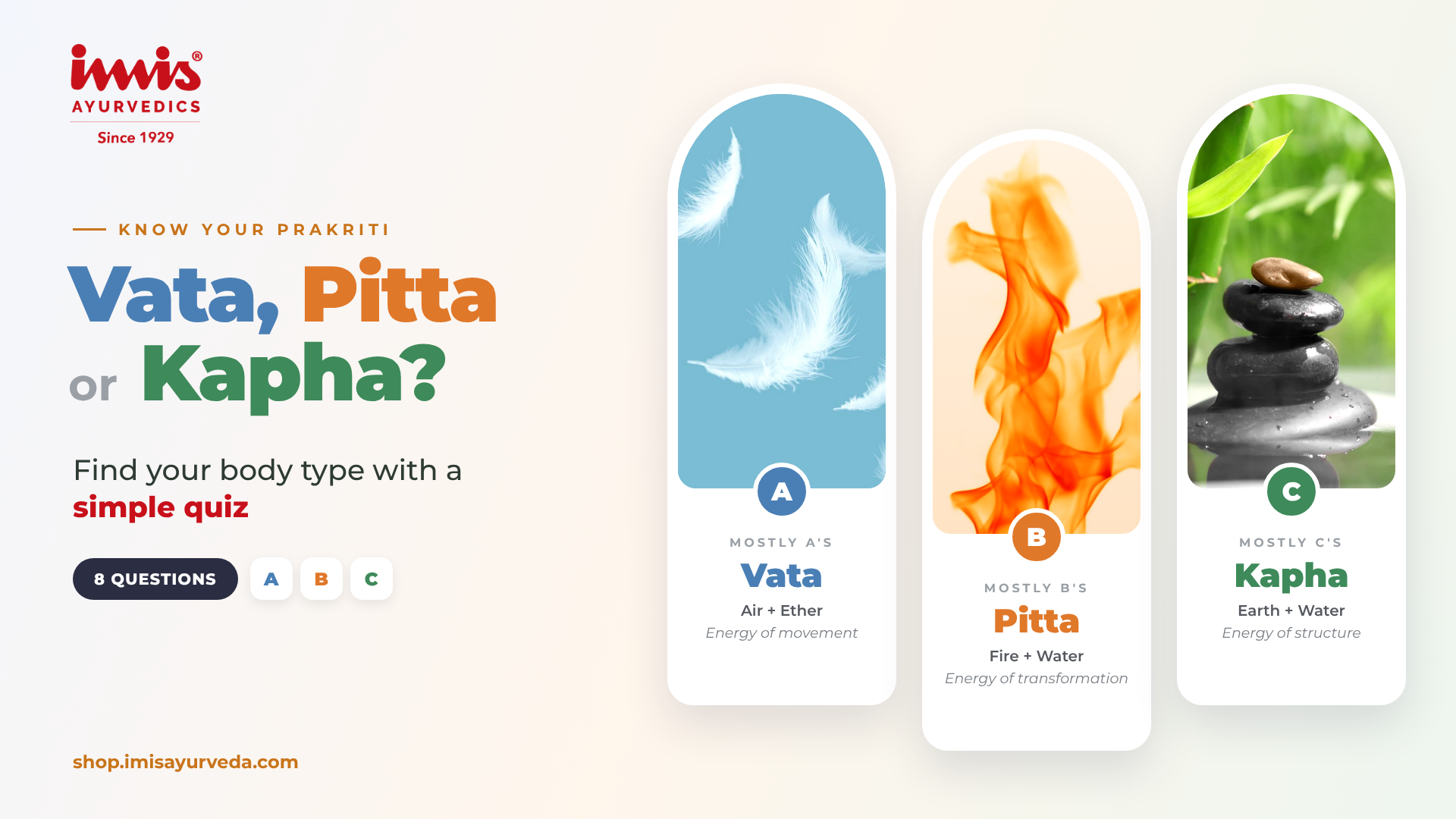
One of the fundamental concepts that explains this individual variation is Prakriti, an individual’s natural body constitution. Ayurveda classifies this constitution into three primary doshas: Vata, Pitta and Kapha. As per Ayurvedic philosophy, everything in the universe is composed of five fundamental elements: Ether (Space), Air, Fire, Water, and Earth. Within the human body, these elements then combine into three dynamic energies, or Doshas: Vata, Pitta, and Kapha. In short, the doshas can be understood as the anatomical and physiological functioning of the body divided into different domains called Vata, Pitta and Kapha. While everyone contains all three doshas, there is a variation in permutation and combination of these doshas for each individual.
The Quick Dosha Quiz
First, grab a pen or keep a mental tally of your answers (A, B, or C) across the eight dosha quiz questions below. Answer based on your lifelong or long-practiced natural tendencies rather than temporary moods or recent lifestyle changes.
Dosha Quiz Part 1: Body, Skin, Digestion and Temperature
1. Physical Frame & Weight
A: Thin, light, and slender; I find it hard to gain weight.
B: Medium, athletic, and well-proportioned; I gain or lose weight fairly easily.
C: Solid, sturdy, or heavier build; I gain weight easily and lose it slowly.
2. Skin & Hair
A: Dry, thin, or cool skin; dry, frizzy, or thin hair.
B: Warm, sensitive, or slightly oily skin prone to redness or freckles; fine, straight hair that may gray or thin early.
C: Smooth, thick, cool, and well-hydrated skin; thick, wavy, lustrous hair.
3. Appetite & Digestion
A: Irregular—sometimes I’m starving, other times I forget to eat; prone to gas or bloating.
B: Strong and sharp—I get irritable or angry if I miss a meal; fast digestion, occasionally prone to acidity.
C: Steady and mild—I can easily skip meals without discomfort; slow, heavy digestion.
4. Body Temperature & Weather Preference
A: My hands and feet are often cold; I dislike cold, windy weather and love warmth.
B: I run warm and sweat easily; I struggle in hot, humid weather and prefer cool environments.
C: I adapt well to most temperatures, though I dislike cold, damp, or rainy days.
Dosha Quiz Part 2: Sleep, Energy, Memory and Stress
5. Sleep Patterns
A: Light and easily interrupted; my mind often races at bedtime.
B: Sound and moderate (usually 6–7 hours); I wake up alert and ready to go.
C: Deep, heavy, and long; I love sleeping in and feel groggy if woken early.
6. Energy & Activity Style
A: Quick bursts of high energy followed by sudden fatigue; I move and talk fast.
B: Focused, driven, and intense; I approach tasks and exercise with competitive determination.
C: Calm, steady, and enduring; I take my time starting tasks but have great stamina once I begin.
7. Learning & Memory
A: I learn new things very quickly, but I also forget them just as fast.
B: Sharp, analytical, and focused; I retain information well and enjoy problem-solving.
C: Slower to absorb new concepts, but once I learn something, I remember it for life.
8. Response to Stress
A: Anxious, overwhelmed, scattered, or worried.
B: Irritated, impatient, critical, or frustrated.
C: Withdrawn, stubborn, unmotivated, or resistant to change.
Tally Your Dosha Quiz Results
Next, count how many A’s, B’s, and C’s you selected:
- Vata-dominant: Mostly A’s
- Pitta-dominant: Mostly B’s
- Kapha-dominant: Mostly C’s
- Two nearly equal scores: You have a dual-dosha constitution (e.g., Vata-Pitta or Pitta-Kapha), which is very common.
How to Understand and Adapt Your Dosha Quiz Results
1. Vata (The Energy of Movement)
Vata governs all the micro and macroscopic movement in the body. This includes breathing, blood circulation, nerve impulses, and thoughts. Vata types are naturally lively, imaginative, and quick-thinking. However, because Air and Ether are light and changeable, Vata is the easiest dosha to knock off balance.
How to stay balanced: Prioritize warmth, grounding routines, and nourishment. Also, favor warm, cooked meals with healthy fats (like ghee, olive oil, and soups), keep a consistent sleep schedule, and opt for gentle, grounding movement like yoga or walking.
2. Pitta (The Energy of Transformation)
Pitta governs overall digestion, metabolism, body temperature, and mental clarity. People with a pitta constitution are natural leaders: ambitious, sharp-witted, and efficient. When excess digestive or metabolic fire builds up in the body, their drive can tip into burnout, inflammation, or short tempers.
How to stay balanced: Focus on cooling and moderation. Also, incorporate sweet, bitter, and astringent foods (like leafy greens, cucumbers, melons, and coconut), avoid overly spicy or fried foods, spend time near water or in nature, and practice non-competitive hobbies.
3. Kapha (The Energy of Structure)
Kapha provides lubrication, stability, strength, and immunity. People with a kapha constitution are the steady anchors in any room. They are warm, patient, supportive, and physically resilient. When Earth and Water accumulate excessively, they can feel weighed down physically and emotionally.
How to stay balanced: Seek stimulation, warmth, and lightness. Also, favor light, spiced, and warming foods (using ginger, black pepper, and turmeric), wake up early before sunrise, engage in vigorous daily cardio, and embrace new experiences to keep energy flowing.
Can your body type change over time?
According to Ayurveda, Prakriti is established at the time of conception and remains relatively constant throughout life. However, the balance of the doshas can be influenced due to factors like age, seasonal variations, diet, lifestyle, stress and environmental changes.
For example, Vata tends to accumulate during certain stages of life and seasons, Pitta may become aggravated by excessive heat, and Kapha may increase with inactivity and heavy dietary habits. That is why Ayurveda places importance on Dinacharya (daily regimen), Ritucharya (seasonal regimen), appropriate food habits and maintaining a balanced lifestyle.
Conclusion
Ayurveda emphasises that there is no single ideal body constitution. Instead, each Prakriti has its own strengths and tendencies. Understanding whether Vata, Pitta or Kapha is predominant is more than identifying a body type. The objective is not to change your natural constitution. Instead, this is an introduction to understanding individual differences in physical characteristics, digestion, energy, behaviour and lifestyle requirements. It also helps you maintain the balance of your doshas through appropriate food, physical activity, sleep and lifestyle practices.