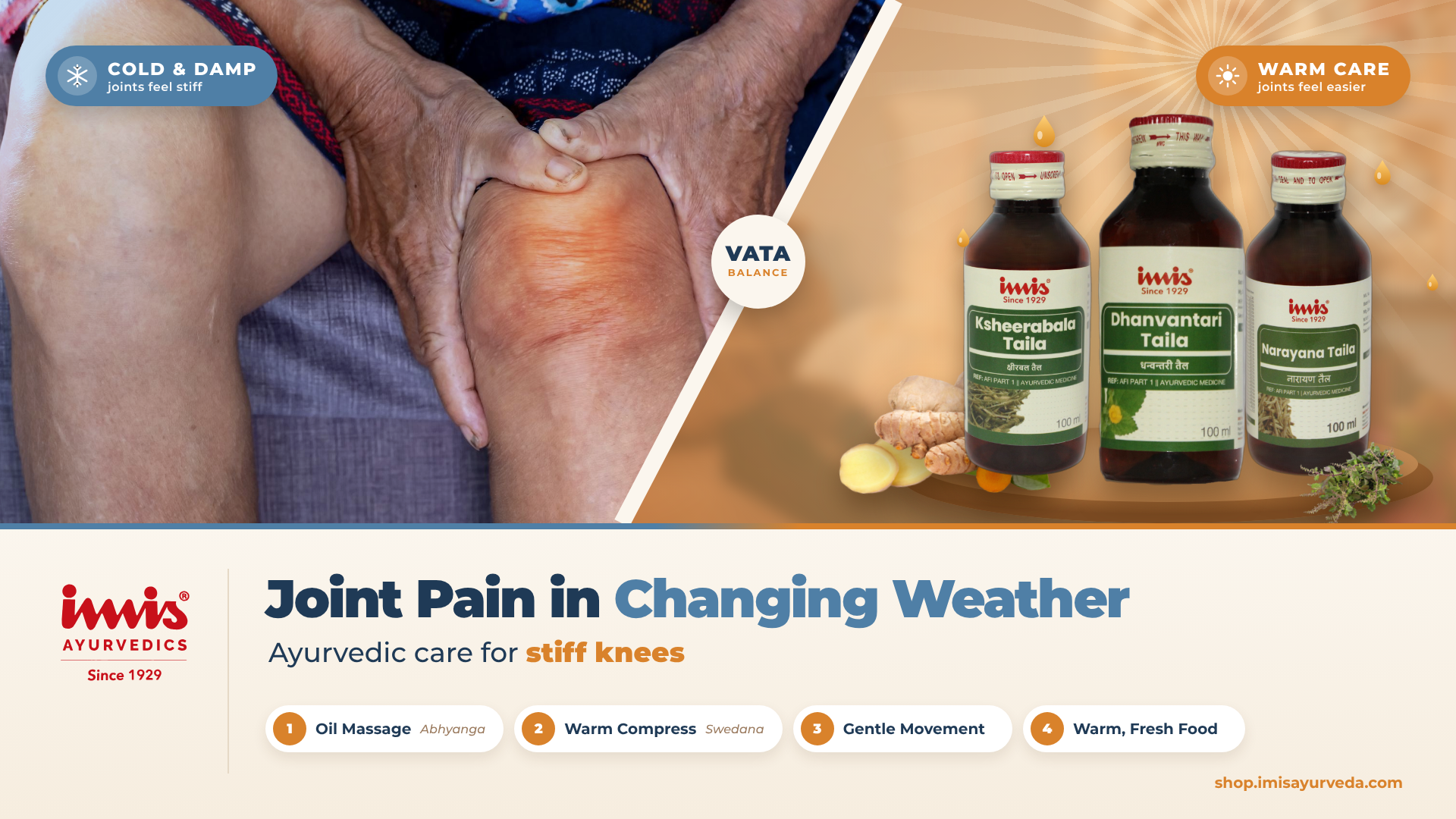
Have you ever noticed your knees feeling stiffer on a cold morning or your joints becoming uncomfortable when the weather turns damp or rainy? For many people, joint pain in changing weather is a familiar problem, as shifts in temperature, humidity and atmospheric pressure seem to bring increased discomfort.. Simple activities such as getting out of bed, climbing stairs, walking or sitting cross-legged may suddenly feel more difficult.
Weather changes do not directly cause every type of joint problem. However, they can influence how people experience existing joint conditions, particularly osteoarthritis and other chronic musculoskeletal disorders. From an Ayurvedic perspective, such discomfort often relates to an aggravation of Vata dosha. Vata governs movement, flexibility and the functioning of joints. Understanding this link between joint pain and changing weather, and adopting appropriate seasonal care can help maintain joint comfort and mobility.
Why Does Joint Pain Increase in Changing Weather?
Many people notice joint pain in changing weather, especially during colder, rainy or humid periods. Some people with arthritis report increased stiffness and discomfort when temperatures drop or atmospheric pressure changes.
Several mechanisms may contribute to this experience. For example, cold temperatures can increase muscle tension and make surrounding tissues feel less flexible. Reduced physical activity during colder weather may also contribute to stiffness. In addition, in people with osteoarthritis, changes in atmospheric pressure may influence the sensitivity of already affected joints and surrounding tissues.
The knee is particularly vulnerable because it supports much of the body’s weight and plays an important role in everyday movement. Age-related cartilage changes, previous injuries, excess body weight and reduced muscle strength can further increase the likelihood of knee discomfort.
Understanding Joint Pain Through Ayurveda
Ayurveda views health through the balance of the doshas, tissues (dhatus), digestive and metabolic processes (agni), and the body’s channels (srotas). Ayurvedic texts often discuss joint discomfort and restricted movement in relation to Vata dosha, which relates to movement, dryness, and variability.
According to Ayurveda, several factors can aggravate Vata Dosha. These include improper dietary habits, irregular daily routines, excessive physical activity, injuries, emotional stress, ageing and seasonal or weather changes.
In Sandhigata Vata (joint disorders), Vata is the predominant Dosha responsible for joint pain, dryness and degeneration. Meanwhile, Kapha plays a role in joint stability, lubrication and cushioning. Its imbalance may contribute to stiffness, heaviness and restricted movements. Similarly, Pitta, associated with heat and inflammatory processes, may manifest as joint warmth, redness, tenderness and burning sensation.
Practical Ayurvedic Self-Care for Stiff Knees
1. Consider Gentle Oil Massage
Abhyanga, or oil massage, is a traditional Ayurvedic practice. Gentle massage around the thigh and lower leg may feel relaxing and help some people become more comfortable before movement. Use only a small amount of skin-safe oil and gentle pressure. Avoid forceful massage over a painful, swollen, hot, injured, or recently operated joint. Also, stop if massage increases pain or causes skin irritation. View oil massage as a comfort practice, not a treatment that repairs cartilage or cures arthritis.
You can consider oils such as Narayana Taila, Dhanvantari Taila, Ksheerabala Taila, etc. Ayurvedic Medicine for Arthritis & Joint Wellness – IMIS Ayurveda
2. Keep the Joints Comfortably Warm
Ayurveda traditionally uses Swedana, or therapeutic fomentation, to help reduce stiffness and support movement. In addition, gentle local warmth may relax tight muscles and make movement more comfortable. A warm towel or a comfortably warm compress placed over the knee for a short period can be a simple home-care measure.
During cooler weather, wear clothing that keeps the knees and legs warm. A warm shower or a comfortably warm compress may help ease temporary stiffness. However, avoid very hot applications, especially if the knee is swollen, red, or hot to touch. Heat is generally more suitable for stiffness without active swelling. On the other hand, a wrapped cold pack may be more helpful for a newly swollen or irritated knee. Do not apply ice or heat directly to the skin.
3. Start the Day with Gentle Movement
After waking, take a few minutes to move slowly before beginning demanding activities. Gentle knee bends within a comfortable range, ankle pumps, and short indoor walks can help reduce the feeling of stiffness after rest. However, avoid sudden deep squats, jerky movements, or exercising through sharp pain.
Above all, regular movement is important. Low-impact activities such as walking on level ground, stationary cycling, and water-based exercise can help maintain mobility. Strengthening exercises targeting the quadriceps, hamstrings, hip muscles, and other supporting muscles help improve joint stability, support proper joint function, and enhance mobility. Finally, increase activity gradually and adjust it if pain or swelling worsens.
Yoga asanas like Tadasana (Mountain pose), Dandasana (Staff Pose), Baddha Konasana (Butterfly Pose) etc. and gentle knee flexion-extension and ankle rotations may be helpful.
4. Follow a Balanced, Nourishing Diet
Ayurveda emphasizes regular meal timings and foods suited to an individual’s digestive capacity and constitution. A balanced diet rich in vegetables, fruits, whole grains, pulses, nuts, and adequate protein supports overall health. In addition, maintaining a healthy body weight may help reduce stress on the knee joints.
During colder seasons, Ayurveda traditionally prefers warm, freshly prepared, and easily digestible foods to support Vata balance. Nutritious options such as vegetable soups, ginger, turmeric, sesame seeds, walnuts, almonds, and protein-rich foods can contribute to musculoskeletal well-being. In addition, adequate hydration, calcium, and vitamin D intake are also important.
5. Use Ayurvedic Medicines Only with Professional Guidance
Ayurveda offers herbal and herbo-mineral-metallic preparations and therapies traditionally selected according to the person’s symptoms and overall health.
Some useful herbs are as follows. Ayurveda values Shallaki (Boswellia serrata) for its boswellic acids. Researchers have studied these for their potential role in supporting healthy inflammatory responses. Practitioners commonly use Nirgundi (Vitex negundo) in Ayurvedic external applications for joint pain and swelling. Meanwhile, Rasna (Pluchea lanceolata) is a well-known ingredient in formulations used for Vata-related musculoskeletal discomfort. Ayurveda also traditionally appreciates Ashwagandha (Withania somnifera) for its rejuvenating and restorative properties.
These herbs are available in various Ayurvedic preparations, including powders, oils, tablets, and classical formulations. However, their suitability and dosage vary according to an individual’s health status, age, symptoms, and associated medical conditions.
Other medicines useful are Bone Joint & Muscle Care – IMIS Ayurveda , Ayurvedic Medicine for Arthritis & Joint Wellness – IMIS Ayurveda
6. When Should You Seek Medical Advice?
Do not assume that joint pain and stiffness are simply due to changing weather. Arrange a medical assessment if pain persists for more than a couple of weeks, keeps returning, affects sleep or daily activities, or comes with prolonged morning stiffness.
Also, seek urgent medical attention if the knee becomes very painful, markedly swollen, deformed, or impossible to move or bear weight on. A hot, red knee with fever or feeling unwell needs urgent assessment because infection is one possible cause.
7. Embracing Seasonal Care for Healthier Joints
Changing weather can make existing knee discomfort more noticeable, but it need not mean giving up an active lifestyle. Regular movement, stronger supporting muscles, a balanced diet, healthy body weight, adequate rest, and timely medical care all support joint health.
In short, consistent care supports healthy joints. A little attention to movement, nourishment and seasonal routines can go a long way towards keeping your knees comfortable.
Disclaimer: This article is for general educational purposes and is not a substitute for diagnosis or treatment by a qualified healthcare professional. Use Ayurvedic medicines and therapies only under appropriate professional guidance.