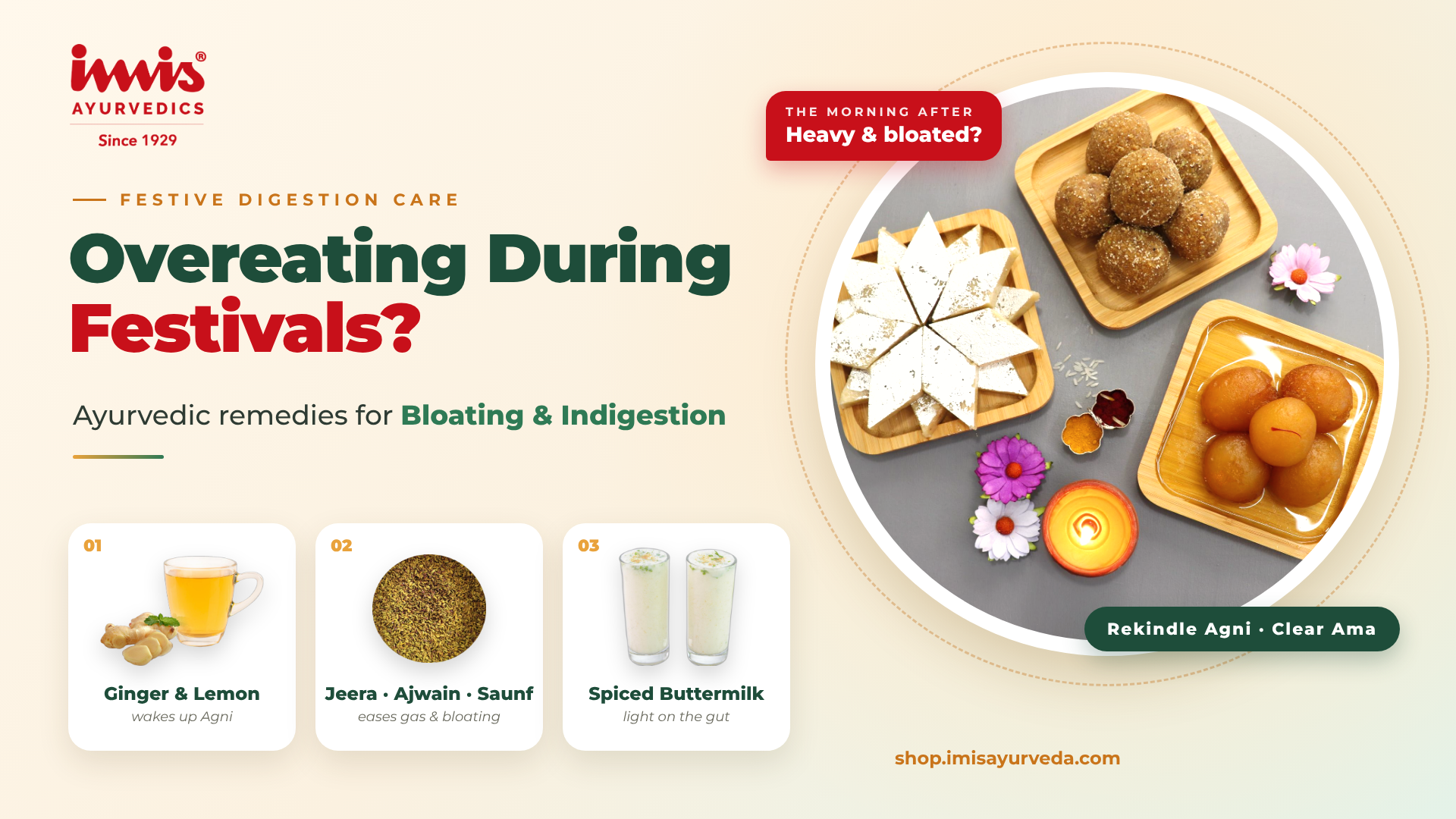
Festival season is a joy for the senses. Glowing lamps, family gatherings, and a table full of sweets, fried snacks, and rich curries make it nearly impossible to refuse a second helping. No wonder overeating during festivals is so common.
Then comes the morning after. Your stomach feels heavy, your belly is bloated, there’s a sour taste in your mouth, and another meal sounds unthinkable.
If this sounds familiar, you’re not alone, and there’s no need for guilt. Ayurveda has simple, gentle remedies that Indian kitchens have used for generations. Let’s see why overeating during festivals upsets digestion and how to restore balance.
Why Do We Feel So Heavy After Overeating During Festivals?
Ayurveda places great importance on Agni, your digestive fire. A steady flame cooks food well, but pile on too much fuel at once and it smoulders, leaving food half-cooked. Festival eating does exactly this: large portions, heavy oily and sugary dishes, irregular timings, and lying down right after a meal.
The undigested residue is called Ama, and Ayurveda blames it for heaviness, bloating, gas, and a coated tongue. Think of Ama as the sticky sludge left when the fire runs low. Every remedy below aims to rekindle Agni and clear Ama gently.
1. Sip Warm Water Through the Day
This is the easiest remedy of all. Warm water supports digestion and helps the body clear what it doesn’t need. Sip it slowly through the day, and skip cold drinks for a few days, as tradition holds that they dampen digestive fire. A few slices of fresh ginger add extra benefit.
2. Jeera-Ajwain-Saunf Water
This humble trio is a classic combination for gas and bloating. Cumin supports digestion, carom seeds ease heaviness, and fennel soothes the gut. Boil half a teaspoon of each in two cups of water for five to seven minutes, strain, and sip warm once or twice a day.
3. Ginger, Lemon, and Rock Salt
Ayurveda calls ginger Vishwabhesaj, the “universal medicine.” A small piece of fresh ginger with a few drops of lemon and a pinch of rock salt, taken 15 to 20 minutes before a meal, is traditionally used to awaken appetite. After overeating, a cup of ginger tea with little sugar is very comforting.
4. Spiced Buttermilk
Thin buttermilk (takra) is considered light and friendly to the gut. Whisk half a cup of curd with one cup of water, then add roasted cumin powder, a little rock salt, and coriander leaves.
5. Let Your Stomach Rest: Eat Light
After a festive feast, avoid burdening your digestion with another heavy meal. Allow bloating and discomfort to subside first. Once you feel comfortable and genuine hunger returns, choose light, warm preparations such as Manda (thin rice gruel), Peya (soupy rice gruel) and Vilepi (thicker rice porridge).
Ayurveda emphasises choosing food according to Agni (digestive capacity), gradually progressing from lighter to more substantial foods. You can also opt for soft moong dal khichdi, thin moong dal soup and well-cooked vegetables like bottle gourd or ridge gourd. Mild seasoning with ginger and cumin can enhance flavour. Eat according to your appetite. You don’t need to starve, because extreme fasting only leaves you weak and cranky.
6. Triphala at Bedtime
Triphala is a well-known blend of three fruits: amla, haritaki, and vibhitaki. It is traditionally used to support digestion and regular bowel movements, usually about half a teaspoon of the powder with warm water at bedtime.
7. Walk and Eat Mindfully
Ayurveda recommends a gentle walk of about 100 steps after meals (shatapavali). A slow stroll helps food move along and reduces that stuck, heavy feeling. Avoid lying down right after eating, and keep two to three hours between dinner and bedtime.
Prevention is easier than cure. Fill your stomach about half with food, one quarter with liquid, and leave one quarter empty. Don’t arrive starving, chew slowly, pick only your true favourites, and keep dinner early and light. Good sleep and a few minutes of deep breathing matter too, since stress weakens Agni as much as fried snacks do.
8. Classical Ayurvedic Preparations for Digestion
When kitchen remedies aren’t enough, Ayurvedic physicians use classical formulations. IMIS Pharmaceuticals, maker of Ayurvedic medicines since 1929, produces many of them:
- Hinguwastaka Churna: asafoetida, ginger, pepper, cumin, and carom seeds, traditionally taken with the first morsel of food and ghee for gas and colic.
- Bhaskara Lavana Churna: for indigestion and abdominal colic.
- Trikatu Churna, Chitrakadi Vati, and Agnitundi Vati: to kindle Agni, improve appetite, and clear Ama.
- Mahashankha Vati: a digestive and carminative tablet, also used in hyperacidity.
- Avipathikara Churna: the classical remedy for acidity, indigestion, and constipation.
- Kumaryasava, Mustakarishta, and Abhayarishta: fermented tonics taken after food for dyspepsia, bloating, and constipation.
- Triphala Churna: for relieving constipation and bloating.
IMIS also makes Ayurvedic formulations for everyday use: Digem Pro tablets (acidity, reflux, bloating), Imisedon tablets (acidity and colic), Imidige syrup (indigestion and poor appetite), Madiphala Rasayana syrup (dyspepsia and nausea), and Imilax tablets (constipation).
Strengths differ, and some contain gentle purgative herbs that don’t suit pregnancy or loose motions. Please use them only as advised by a qualified Ayurvedic physician, who can match the right formulation to your body and your complaint.
A Quick Checklist to Avoid Overeating During Festivals
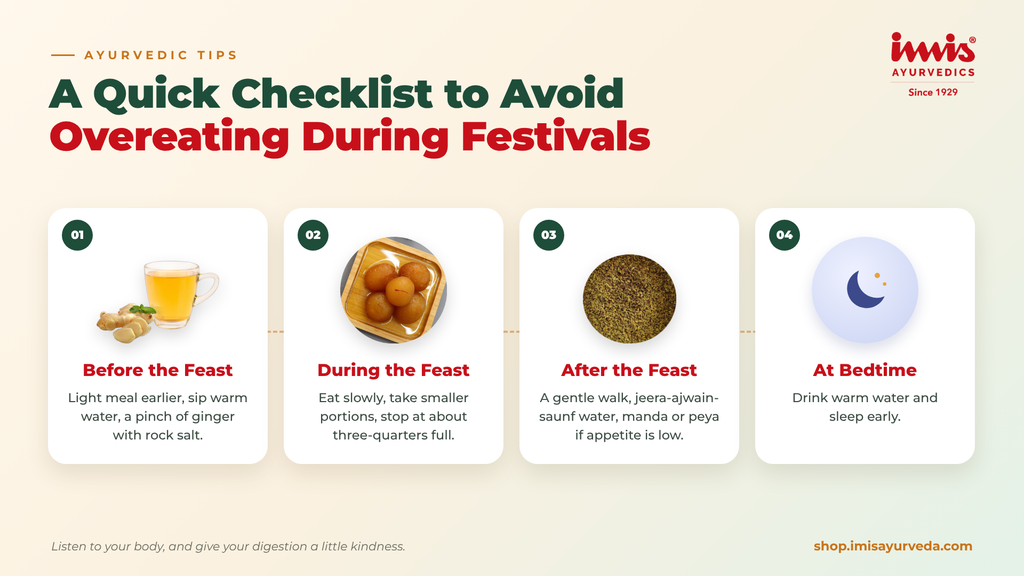
Before the feast: Have a light meal earlier, sip warm water, and take a pinch of ginger with rock salt.
During the feast: Eat slowly, take smaller portions, and stop at about three-quarters full.
After the feast: Take a gentle walk, sip jeera-ajwain-saunf water, and have manda or peya (thin soups) if your appetite is low.
At bedtime: Drink warm water and sleep early.
When to See a Doctor After Overeating During Festivals
Home remedies suit ordinary, occasional discomfort. If you have severe or persistent stomach pain, repeated vomiting, diarrhea, blood in the stool, black stools, chest pain, difficulty swallowing, or symptoms lasting more than a few days, see a doctor promptly.
Final Thoughts on Overeating During Festivals
Festivals are meant to be enjoyed, not feared. A few extra sweets won’t undo your health, so go ahead and savour the festivities with your loved ones. Eat with awareness, listen to your body, and give your digestion a little kindness when it asks for it. And if your tummy complains the next day, the answer is already waiting in your kitchen.
Disclaimer: This article is for general awareness only and is not a substitute for professional medical advice. Please consult a qualified Ayurvedic practitioner or doctor for personalised guidance.