Introduction
Repeated sneezing, a runny nose, itchy eyes, and nasal congestion can make seasonal changes uncomfortable. For some people, symptoms affect sleep, concentration, and daily activities. Changes in weather may coincide with changes in exposure to pollen, mould spores, and other airborne triggers.
Seasonal allergies often take the form of allergic rhinitis, an immune response to substances that are usually harmless. Ayurveda offers a traditional perspective on these symptoms, emphasizing the balance of Doshas, seasonal routines, dietary habits, and individual constitution. Although these perspectives are different, combining sensible self-care with appropriate medical advice can help people manage symptoms safely.
What Causes Seasonal Allergies?
In allergic rhinitis, exposure to an allergen can prompt the immune system to produce immunoglobulin E (IgE) antibodies. These interact with mast cells, leading to the release of histamine and other inflammatory mediators. Histamine contributes to sneezing, itching, and watery nasal discharge, while inflammation can swell the nasal lining and cause congestion.
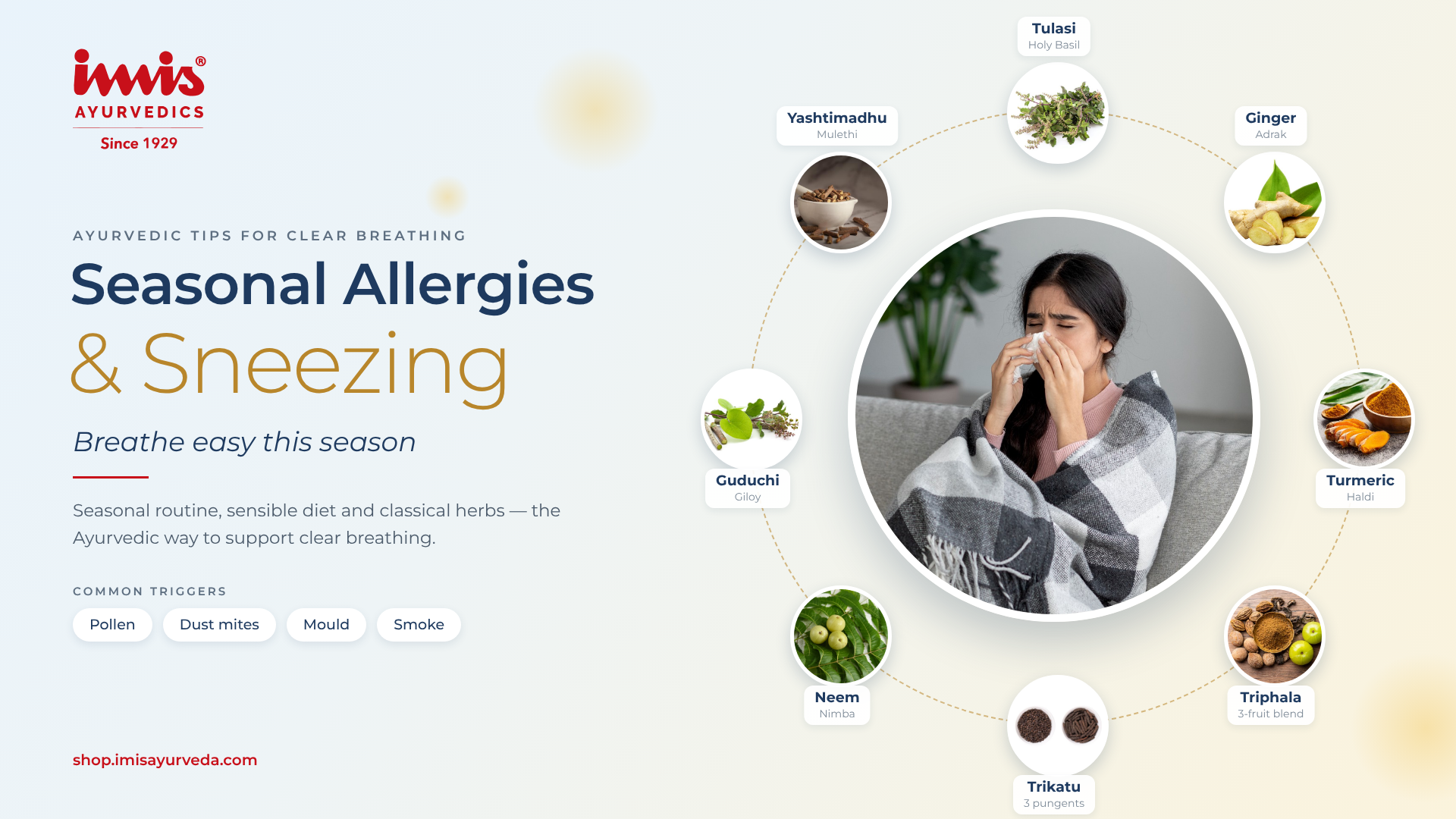
Common triggers include:
- Pollen from trees, grasses, and weeds, depending on the season.
- Dust mites commonly found in bedding, mattresses, and household dust.
- Mould spores, particularly in damp environments.
- Smoke and air pollution, which can irritate the airways and aggravate existing symptoms.
Other symptoms may include itchy or watery eyes, throat irritation, and mucus dripping down the back of the throat. Allergic rhinitis often occurs without fever and may continue while exposure to the trigger persists. Because colds and other conditions can cause similar symptoms, a healthcare professional should assess ongoing or severe symptoms.
Understanding Allergies Through Ayurveda
Ayurveda describes health through the functional balance of Vata, Pitta, and Kapha Doshas. Ayurveda may interpret symptoms resembling allergic rhinitis within this traditional framework, especially through Kapha and Vata involvement. Practitioners may also consider Pitta when irritation or burning is prominent.
Kapha: Congestion and Mucus
Ayurveda traditionally links Kapha with heaviness, coolness, and moisture. An Ayurvedic view may point to Kapha when nasal congestion, excess mucus, heaviness in the head or a blocked feeling is prominent.
Vata: Sneezing and Dryness
Vata relates to movement, dryness, and variability. Practitioners may consider it when repeated sneezing, nasal dryness, or fluctuating irritation is noticeable. Wind, dust, and environmental changes can coincide with symptoms in susceptible people.
Pitta: Heat and Irritation
Ayurveda traditionally links Pitta with heat and transformation. Burning or redness may point to Pitta, but these signs alone do not establish a Dosha imbalance. Ayurveda considers Ritucharya (seasonal regimen), Prakriti (individual constitution), and Agni (digestive capacity) when planning individualised care.
Ayurvedic and Everyday Tips for Clear Breathing
1. Keep the Nasal Passages Clean
Steam inhalation and saline nasal sprays or rinses may help remove mucus and some allergens, easing congestion for some people. Jal Neti is a traditional yogic nasal-cleansing practice that uses saline water. For any nasal rinse, use only distilled, sterile, or boiled and cooled water. Never use untreated tap water. Clean and dry the device after each use. Saline rinsing is different from medicated Nasya. Do not put oils into the nose without professional guidance, as inhaled oil can harm the lungs.
2. Eat a Balanced, Seasonal Diet
Ayurvedic dietary principles encourage food choices suited to individual needs and seasonal conditions. Warm, freshly prepared meals, vegetable soups, and adequate fluids may feel soothing when congestion or throat irritation is present. Warm water or mild ginger tea may also be comforting.
Not everyone with nasal allergies needs to avoid dairy products or cold foods. Base any dietary restrictions on confirmed allergies, individual tolerance, or professional advice rather than general assumptions. A varied diet with adequate protein, vitamins, and minerals supports overall health.
3. Follow a Consistent Daily Routine
Dinacharya, or daily routine, is an important Ayurvedic principle. Regular sleep, consistent meal times, and suitable physical activity support general well-being. Gentle yoga, breathing exercises, and meditation may promote relaxation, but they do not eliminate the underlying allergic response. Avoid forceful breathing practices such as vigorous Kapalabhati or Bhastrika if they trigger sneezing, coughing, dizziness, or breathlessness. If outdoor activity worsens symptoms, consider exercising indoors.
4. Be Careful with Essential Oils
Eucalyptus, peppermint, and lavender oils are sometimes used for respiratory benefits. Strong scents may irritate sensitive airways or trigger coughing and wheezing. Avoid adding essential oils to boiling water for steam inhalation: hot steam can cause burns and may irritate the airways. Never ingest essential oils or apply them inside the nose.
5. Use Ayurvedic Herbs Responsibly
Ayurvedic herbs support health when used wisely, but they are not risk‑free. Always follow classical guidelines, avoid excessive or experimental dosing, and consult a qualified practitioner before combining herbs with modern medicines. Do not replace prescribed allergy treatment with herbs.
Some useful herbs include:
1. Tulasi (Holy Basil) — Ocimum sanctum
A well-known Ayurvedic household herb traditionally used for respiratory wellness. Commonly prepared as herbal tea or taken in household preparations. It has antioxidant, immunomodulatory, antihistamine and antimicrobial properties.
2. Ginger (Adrak) — Zingiber officinale
Commonly used in ginger tea and warm drinks for throat discomfort and cold-like symptoms. Ginger, a trusted Ayurvedic remedy, helps ease cough, sinus congestion, and seasonal colds. Its warming nature and anti‑inflammatory properties support clear breathing, offering comfort during allergy‑prone seasons and promoting respiratory wellness naturally.
3. Turmeric (Haldi) — Curcuma longa
Ayurveda values turmeric, a golden spice, for its anti‑allergic, anti‑itching, and anti‑inflammatory properties. It helps ease sneezing, nasal irritation, and seasonal congestion, supporting clear breathing and natural respiratory wellness during allergy‑prone times.
4. Triphala — Haritaki + Bibhitaki + Amalaki
Triphala is a classical Ayurvedic formulation rich in plant compounds such as polyphenols. Researchers have studied these for antioxidant and anti-inflammatory activity. Valued for its anti‑allergic, anti‑itching, and anti‑inflammatory properties, it supports respiratory comfort.
5. Trikatu — Shunthi + Maricha + Pippali
Trikatu is a traditional Ayurvedic combination of dry ginger, black pepper and long pepper. It is commonly linked with supporting digestion and managing Kapha-related symptoms. In a laboratory cell study, the ethanolic extract of Trikatu showed anti-allergic activity by inhibiting β-hexosaminidase release. This suggests a possible effect on one process involved in allergic reactions.
6. Neem (Nimba) — Azadirachta indica
Neem leaves possess anti-allergic, anti-inflammatory and immunomodulatory properties. Research on neem leaf extract has reported reduced histamine release and modulation of pro-inflammatory cytokines. This suggests a potential role in regulating allergic responses and supporting respiratory wellness.
7. Guduchi — Tinospora cordifolia
Guduchi (Tinospora cordifolia) is a classical Ayurvedic herb known for boosting immunity and easing seasonal discomforts. Ayurveda values it for reducing sneezing, nasal discharge, congestion, and itching, making it a natural support for allergy relief.
8. Yashtimadhu (Mulethi/Licorice) — Glycyrrhiza glabra
Yashtimadhu possesses anti-allergic, anti-inflammatory and immunomodulatory properties. Its bioactive compounds, particularly glycyrrhizin and liquiritigenin, have demonstrated effects on mast-cell degranulation, histamine-related allergic responses and IgE-mediated immune pathways.
Ayurveda values the herbs above for their anti-allergic, anti-itching, and anti-inflammatory properties. However, dosage and suitability vary, so always use them under the guidance of a qualified Ayurvedic physician.
Reduce Exposure to Allergy Triggers
Practical changes at home and outdoors can complement self-care. When pollen levels are high, keep windows closed if possible and shower or change clothes after spending time outside. Wipe surfaces with a damp cloth, wash bedding regularly, and reduce indoor dust. Fix leaks and address dampness or mould. Consider wearing a well-fitting mask when cleaning dusty areas. A simple symptom diary may help identify personal triggers. Note when symptoms occur, where you are, and what you were doing. The most useful steps depend on the allergen involved.
When to Seek Medical Advice
Consult a healthcare professional if allergy symptoms persist or fail to improve with self-care. Also seek advice if they interfere with sleep or daily activities. Seek urgent medical help for severe breathing difficulty, swelling of the lips or tongue, or any signs of a serious allergic reaction.